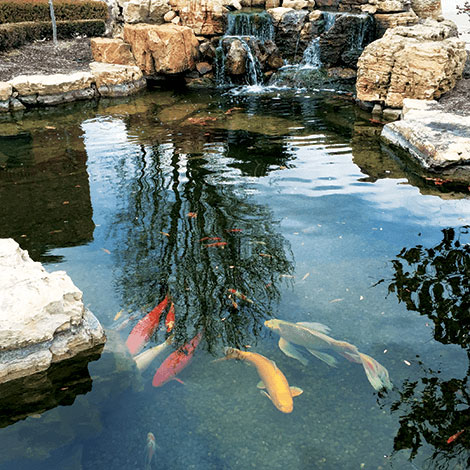
As the seasons change, so do your fish's feeding habits. Koi, goldfish, and other species are cold blooded and take cues from the water temperature. At pond temperatures of 50°F and above, your fish will be active and ready for their summer diet. When temperatures are lower, your finned friends will slow down to get ready to go dormant for winter. Use these fish feeding techniques to keep your fish happy and well.
Cut Back
In getting ready for wintertime, your fish will reduce their activity level and metabolism rate. They naturally start to eat less than when they were growing in summer. As the water temperatures cool, you will want to reduce the quantity of food you serve. Not only will it save you from skimming out what they do not eat, you will also have a cleaner pond since your fish will produce less waste.
Nutritional Facts
In the summer, your fish crave a protein-rich diet, like Growth & Vibrance. This gives them the nutrients they need to grow and add mass. In the spring and fall, your fish will lack the digestive enzymes needed to break down their summer food, so you will want to switch over to a wheat germ based diet, like Spring & Fall Fish Food. This is a carbohydrate-heavy food that is easier to for your fish to metabolize when water temperatures are between 40-50°F. When the water temperatures drop below 40°F, stop all feeding. Your fish will not be able to process the food which can lead to complications as the food will rot in their stomachs. Instead, your fish will live off their fat reserves they stored up during summer.
Something Special
Even though their diet is changing, your fish will still like indulging in a treat from time to time. Some things to feed your pond fish are oatmeal or oat-based cereal or share some veggies, such as carrots, pumpkin, or frozen peas. These snacks will be gentle on their system and give them some extra nutrients.
Food for Thought
Though you can resume feeding your fish their wheat germ food when your pond thermometer consistently reads above 40°F in spring, you may want to consider waiting until the water temperatures get between 45-55°F. After the long winter, take some time to get their appetite back to full force. Waiting will also them to readjust and get their digestive juices flowing. In the meantime, they will satiate their hunger by snacking on any algae in the pond.